Buying a house in Eindhoven Strijp: what to assess
Compare a home in Strijp through established housing, former industrial areas, green edges, travel, sound and development.
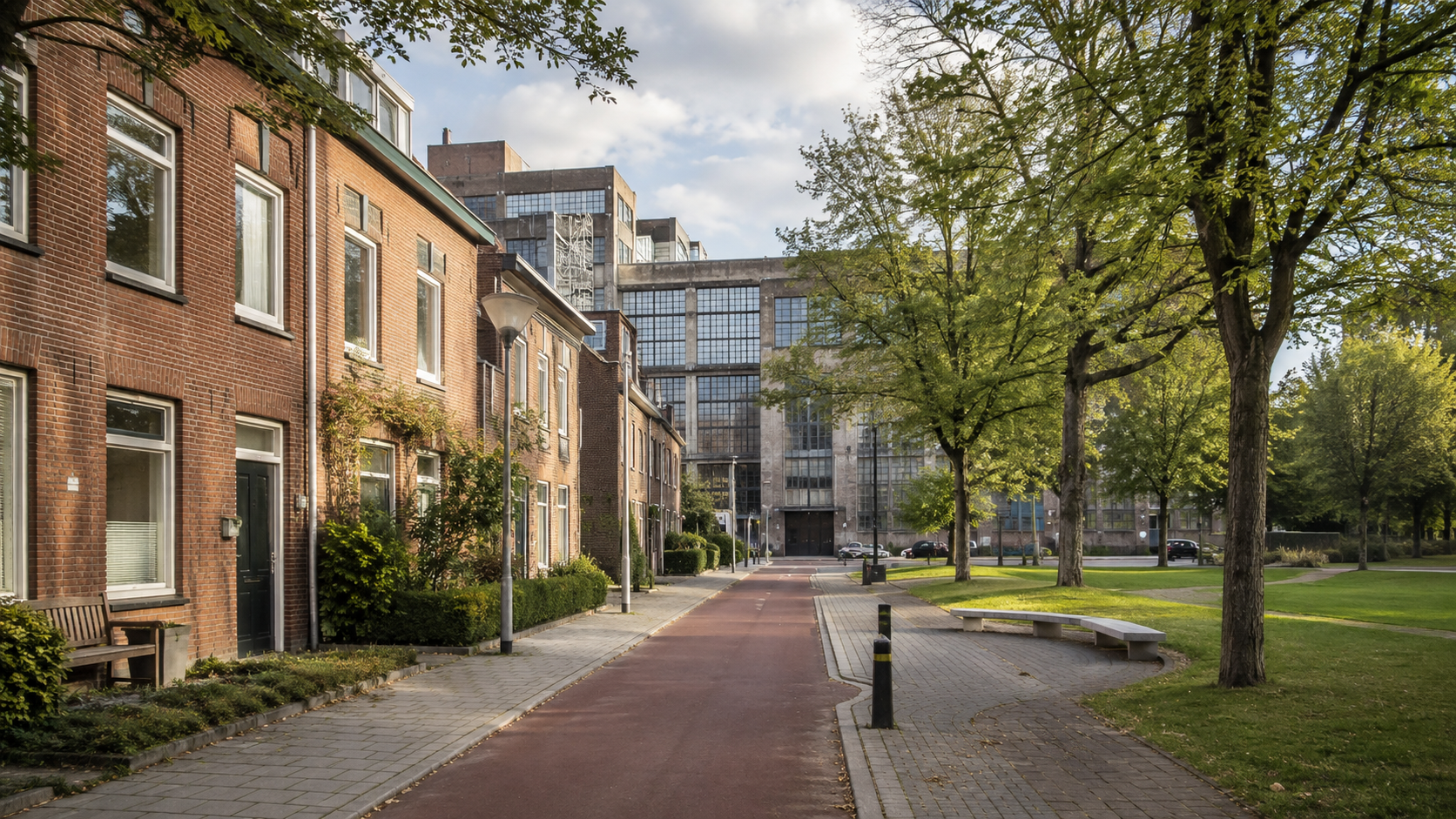
TL;DR: Strijp is too varied for one district-wide verdict. Place the address within its local setting, then compare travel, sound, green space, home condition and possible change with the same fields.
What should you clarify before viewing?
Reading time: 9 minutes
Level: first orientation
Before you start: note your travel pattern, work location, need for green space and tolerance for activity near the home.
At the end: you can explain which part of Strijp fits your routine and which property questions still need an answer.
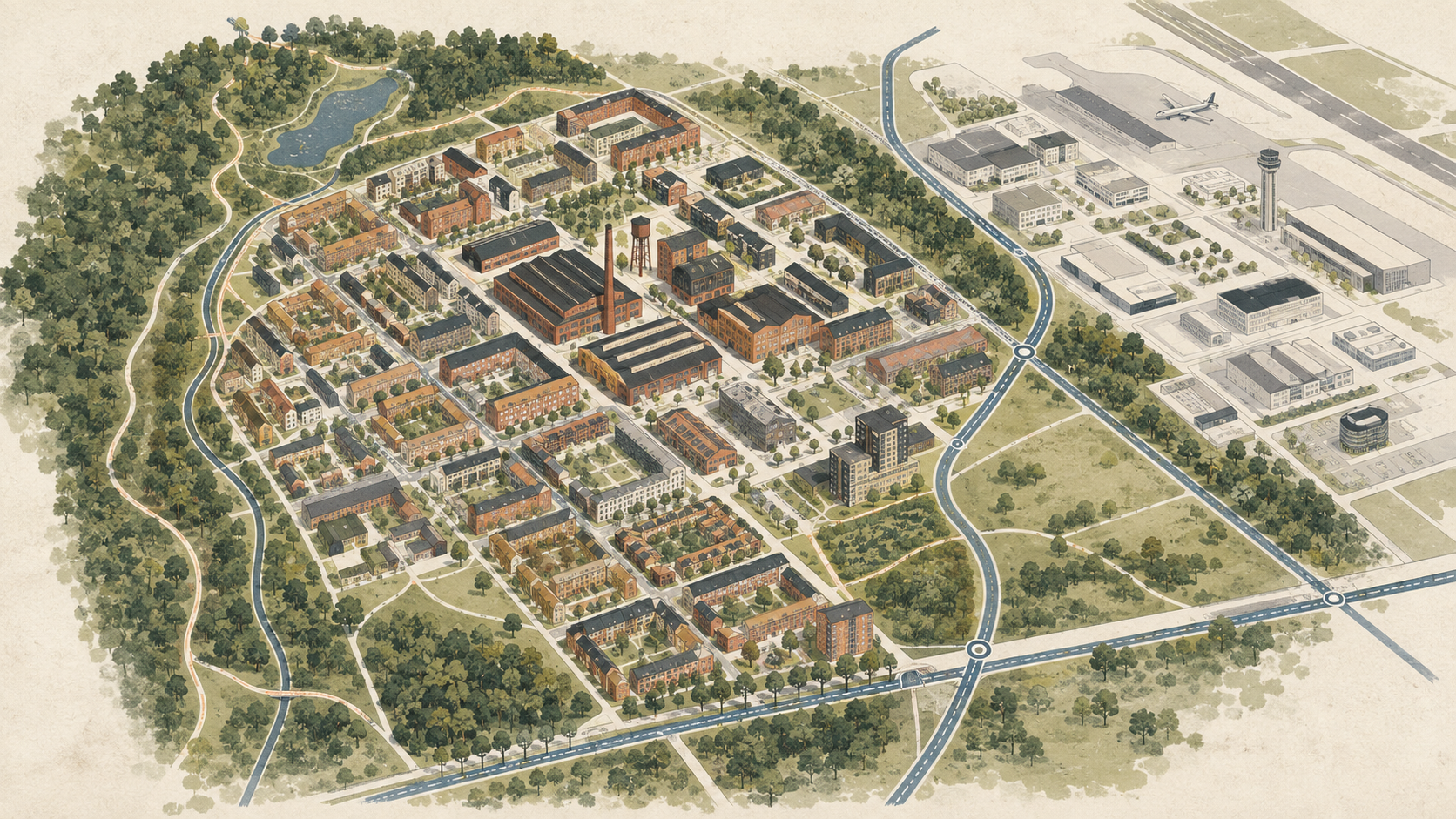
Strijp brings established housing, former industrial areas, business edges, green areas and changing development into one district. The municipality describes several neighbourhood groups and area programmes, so the name on a listing does not tell you enough about the street.
When a contract, valuation or neighbourhood question reaches beyond the address, Eindhoven home-buying questions give you a common frame for the purchase.
What should you bring to the viewing?
Viewing notes
- A weekly travel list for work, school, care and groceries.
- Your preferred balance between shops, activity, open space and quiet.
- Questions about sound, parking, light, storage and maintenance.
- A record that separates the house from the wider setting.
Property information
- The listing, floor plan and energy information.
- Maintenance records, alteration details and shared-building papers where relevant.
- Notes about planned work and any point that needs a professional view.
Before you begin
- Treat the district name as a starting point, then identify the street and local edge.
- Visit at a time that matches your real routine.
- Keep a reserve of questions for the seller, owners’ association or adviser.
How do you assess a home in Strijp?
Step 1: Locate the address within Strijp
Start with the distance between the home and the places you actually use. A listing near a green edge answers a different daily question from a home near a working area, a major road or a busy destination.
What to do:
- Write down your usual journeys and the hours when you make them.
- Mark the street’s relationship to housing, work, open space and transport.
- Ask which part of the setting is permanent and which part may change.
Before you compare Strijp streets, put monthly room, property evidence and contract timing into your plan for buying a house in Eindhoven from budget to keys.
Step 2: Test travel and sound
Strijp can feel different from one block to the next. Walk the last part of the trip, stand near the home and listen at the hours that matter to you.
What to do:
- Test walking, cycling, public transport and car access as needed.
- Note road, rail, aircraft, delivery, business and neighbourhood sound.
- Separate a temporary event or building project from a recurring source.
Step 3: Read the home as a building
Look at layout, light, ventilation, storage and signs of repair. For an apartment, add shared systems, owners’ association records and future work to the same review.
What to do:
- Match each room to the way you plan to live.
- Ask how windows, heating, ventilation and roof or facade work have been handled.
- Record every answer that needs a document rather than a verbal promise.
When you prepare your lender file for a home in Strijp, compare the property’s own evidence with property valuation in Strijp and record green-space and work-area observations separately.
Step 4: Put green space and work areas beside the home
The district description includes wooded areas, business areas and airport-related edges. Those features can shape travel, views, sound and weekend routines. They can also be the reason a home feels connected to open space.
Before you weigh a Strijp address, Strijp area programmes and neighbourhood groups show which public changes and local groups can matter around the home.
Step 5: Compare candidates with the same fields
A fixed comparison keeps a striking industrial building or a leafy street from carrying the whole decision. Record travel, sound, green space, home condition, shared costs and open questions in the same order.
A home and neighbourhood comparison keeps a quiet street, green edge and repair note in the same decision.
When you compare a home with the wider city, Eindhoven neighbourhood comparison data place housing and living-environment questions beside the city average.
Step 6: Turn open questions into an offer brief
Before discussing an offer, list conditions linked to financing, inspection, documents and transfer timing. A home can fit the setting and still need a clearer answer about its own evidence.
How do you know your assessment is ready?
Signs that your assessment is ready
- You can name the street-level setting that supports your routine.
- Your notes distinguish the home from nearby work, traffic and open space.
- You know which records or answers are missing.
- Your offer questions fit both the home and your financial limits.
Give your notes a final check
- Ask someone who was not at the viewing to describe the trade-offs from your notes.
- Read the house notes without the district description, then the district notes without the listing.
- Mark each assumption that needs a seller, association or professional answer.
What can make a Strijp choice misleading?
When the district label hides different local settings
Signs: the listing sounds right, yet the street visit feels unlike the area you had in mind.
Response: identify the nearest housing, work, open-space and transport edges and rewrite the comparison around the address.
Prevention: use the street, not the district name, as the unit of observation.
When travel time seems shorter than it feels
Signs: a map looks convenient but the actual trip has difficult crossings, noise or weak evening connections.
Response: test the trip at the time you need it and record each leg.
Prevention: include the last walk or cycle, not only the main transport line.
When development questions remain open
Signs: a view, road or nearby use may change and the listing gives no clear answer.
Response: ask the seller and municipality which public information applies to the address.
Prevention: keep known, reported and unanswered items separate.
How does your situation change the assessment?
Commuter household
Test the complete trip on a weekday and write down the point where the home saves or adds time. Give recurring sound and parking the same attention as distance.
Household seeking green space
Walk the path to the open area you would actually use. Note surface, crossing points, distance and the hours when it feels suitable.
Home worker
Visit during daytime activity, inspect the work room’s light and listen with the window open. Ask how shared entrances or nearby uses affect calls.
How do you keep your file safe?
Protect the file
- Keep passports, bank statements, contracts and other personal documents out of a public message.
- Share sensitive records only with a recipient and channel you have verified.
- Ask a suitable professional when a building, contract or financing question goes beyond general information.
Keep observations useful
- Date each visit.
- Label a statement as confirmed, reported or still open.
- Keep a repair estimate separate from the home’s asking price.
Questions buyers ask about Strijp
Is Strijp one type of neighbourhood?
No. The district contains different housing settings, working areas, green edges and travel conditions. The address and its immediate surroundings deserve their own assessment.
Does nearby green space remove the need for a home inspection?
No. Open space helps you judge daily fit, while the home still needs its own review of condition, documents and possible shared costs.
How should I handle a home near an active area programme?
Record the current setting, the change that may occur and the question that still needs confirmation. A professional can help with the property or contract part of the decision.
What should you do before making an offer?
Write one paragraph about the address, one about the home and one about open questions. That record gives a mortgage adviser, building inspector or notary a clearer starting point when you ask for help.
Which local details need a fresh check?
Municipal district information and neighbourhood data add public context. They cannot replace an address-level viewing, home records or professional advice for a personal decision.
Buying in Eindhoven Strijp involves the local setting, travel, the home's evidence, green space and change around the address. This site gives general information, so confirm property, contract and financing decisions with qualified professionals or relevant institutions.
Ask a question about buying in Strijp →Please leave passports, contracts, bank details and other personal documents out of the message.